How to Style a Linen Shirt for Men in India — Office, Casual, Festive and Wedding

How to Style a Linen Shirt for Men in India — Office, Casual, Festive and Wedding

Most linen styling guides are written for Western contexts — beach holidays, European summers, American offices. This one isn't. Here's how a linen shirt actually works in India, across the four situations where Indian men actually wear them.

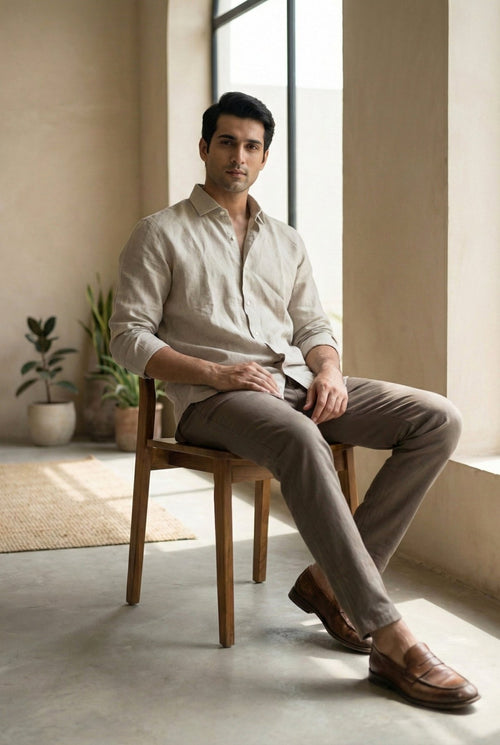
Indian man wearing deep navy blue pure linen shirt — Neel by Tyra Linen India, 100% European linen 125 GSM, styled for office wear with tailored trousers

The Neel — deep indigo blue 100% pure European linen shirt by Tyra, 125 GSM. Works equally well for Indian office environments, smart casual, and evening occasions.

Linen has an image problem in India that it doesn't deserve. Some people think it's too casual for the office. Others think it's too wrinkly for occasions. A third group thinks it only works in resort settings — which isn't a context most Indian men encounter regularly.

All three assumptions are wrong. Linen is one of the most versatile shirts you can own, particularly for India's climate, and the styling rules are simpler than most people realise. This guide covers all four occasions where Indian men actually wear shirts, with specific outfit combinations for each.

The One Rule That Applies to All Occasions: Fit First

Before color, before tucking decisions, before occasion-appropriateness — fit determines whether a linen shirt looks like a deliberate wardrobe choice or a borrowed shirt. This is more important with linen than with most fabrics because linen's natural texture means there's already visual information in the cloth. A bad fit adds visual noise on top of that texture, and the result looks sloppy rather than relaxed.

What good fit means for a linen shirt: the shoulder seam should sit exactly on your shoulder point. The chest should have ease but not excess — you should be able to pinch about 3–4cm of fabric on each side, no more. The sleeve should end just above the wrist bone when buttoned. The body should taper slightly through the torso without being tight.

At Tyra, all shirts are cut in a casual tailored fit — which means enough structure to look intentional, enough ease to wear in 38°C heat for eight hours without thinking about it. This fit is the default for the outfit combinations below.

Linen wrinkles are part of the fabric's character. A poorly fitted linen shirt that's perfectly ironed still looks worse than a well-fitted linen shirt with natural creases.

The Four Occasions — At a Glance

🏢
Indian Office
Formal, corporate, creative workplaces
Solid colors in navy, white, sky blue, earthy neutrals. Tucked in. Tailored trousers. Leather shoes or loafers. Add a cotton blazer for conservative offices.
🌿
Casual Everyday
Weekends, outings, travel, daily wear
Any color or pattern. Untucked. Sleeves rolled to elbow. Slim chinos, dark jeans, or linen trousers. Sandals, loafers, or clean sneakers.
🪔
Festive Occasions
Diwali, Eid, Holi, house functions
Rich, warm tones — terracotta, deep indigo, warm brown, sienna. Paired with kurta trousers or well-fitted ethnic bottoms. Mojris or leather sandals.
💍
Indian Wedding Guest
Daytime ceremonies, outdoor, destination
Rich earthy or jewel tones. Paired with tailored kurta trousers or well-cut chinos. Add a bandhgala jacket or Nehru collar blazer for evening receptions.

Linen Shirts for the Indian Office

The biggest misconception: linen is too casual for professional environments. It isn't — the wrinkles are not a professionalism issue; they're a fabric property. What matters for the office is colour, fit, and styling. A well-fitted navy or white linen shirt tucked into dark trousers reads as entirely professional in most Indian workplaces.

Corporate and formal office environments

Solid, muted tones. Tucked in. Tailored dark trousers. Leather shoes. If the office is conservative (law, finance, formal corporate), add a lightweight cotton or linen-cotton blazer. This adds enough structure to signal formality while allowing the shirt to breathe underneath.

// Outfit Formula — Formal Office
ShirtNeel (navy indigo) or Asmaan (sky blue) — solid, tucked in
TrousersDark navy or charcoal tailored flat-fronts — slim or regular cut
ShoesBlack or dark brown Derby shoes or Oxford loafers
LayerLightweight cotton blazer in navy or grey (optional, for conservative offices)
BeltMatch to shoe color — keep it simple, no statement hardware

Business casual and creative workplaces

Most Indian offices in tech, media, design, and startups operate in a business-casual register — where a linen shirt is not just acceptable but often the best-looking option in the room. Earthy tones, slim chinos, and loafers. Optionally untucked if the shirt length and fit allows it.

// Outfit Formula — Business Casual
ShirtMitti (warm earth brown) or Paridrishya — solid tone, half-tucked or untucked
TrousersStone beige, khaki, or warm grey slim-fit chinos
ShoesSuede or leather loafers — tan, cognac, or white canvas
WatchMinimal metal or leather strap — nothing too sporty

Solid linen shirts for the Indian office

Navy, sky blue, earthy neutrals — 100% European linen, 125 GSM

Shop Solids →

Casual Everyday Styling for Indian Men

This is where linen performs most naturally — and where most people underestimate how good it can look with minimal effort. The key to casual linen styling is that it should look intentional rather than accidental. Linen's natural texture does a lot of the visual work; your job is to not fight it.

Casual styling for men — earthy brown pure European linen shirt Mitti by Tyra, worn untucked with dark chinos. Indian summer casual wear, 100% linen 125 GSM.

The Mitti — earthy brown 100% pure European linen shirt by Tyra. An untucked earth-tone linen shirt with slim dark jeans is one of the most effortless casual looks in Indian summer.

The weekend look

Roll the sleeves to just below the elbow — this is the single styling move that defines casual linen. Leave two buttons open at the collar for a relaxed neckline. Wear untucked over slim dark jeans or narrow-leg chinos. Leather sandals or minimal white canvas sneakers. This combination works for brunch, a morning market, a relaxed evening out, or travel.

// Outfit Formula — Weekend Casual
ShirtAny solid or check/stripe linen shirt — sleeves rolled, untucked, 1–2 buttons open
BottomSlim dark jeans, narrow-leg chinos, or linen trousers in a complementary tone
FootwearKolhapuri sandals, leather chappals, suede loafers, or white canvas sneakers
AvoidCargo pants, oversized joggers, rubber flip-flops — these break the register

Travel and long-day wear

Linen is the best fabric for long days in Indian heat and humidity — flights, train journeys, sightseeing, outdoor markets. It breathes through the day, doesn't trap sweat against the skin, and a light natural crease in linen looks like character rather than negligence.

For travel, choose lighter tones — off-white, sky blue, sandy beige — because they photograph better and feel cooler in direct sun. Pair with comfortable slim chinos and flat sandals or clean walking shoes.

Checks and stripes for casual occasions

Woven checks and stripes in linen are ideal for casual contexts where a solid color would be unremarkable. They add visual interest without effort. The rule: keep everything else in the outfit simple. If the shirt has pattern, the trousers and shoes should be plain. This balance is what makes checked linen look put-together rather than busy.

Checks and stripes for casual linen styling

Sandline · Salt & Still · Vellum · Drift Check · Lattice Check

Shop Checks & Stripes →

Linen Shirts for Indian Festive Occasions

Diwali, Eid, Navratri, Holi, Ganesh Chaturthi, house pujas and family functions — India's festive calendar is dense, and the dress code varies from casual to semi-formal depending on the host, venue, and tradition. A premium linen shirt navigates most of these contexts well, particularly when you choose the right color.

Color is everything for festive linen

Festive occasions in India are saturated environments — flowers, fabrics, jewelery, and decor are richly colored. A pale or neutral linen shirt can look washed out in comparison. For festive wear, go richer: terracotta, warm amber brown, deep indigo, or earthy sienna. These colors hold their presence in festive environments and sit beautifully against Indian skin tones.


Terracotta
Sienna

Warm Brown
Umber

Deep Indigo
Neel

Earth Brown
Mitti

Off-White
Vellum
// Outfit Formula — Festive Occasion
ShirtSienna (terracotta) or Umber (dark earth brown) — tucked or half-tucked
BottomCream or off-white kurta-style cotton trousers, or well-fitted churidar
FootwearMojris, kolhapuri sandals, or clean leather juttis
LayerLightweight Nehru collar short jacket in complementary tone (optional)
Key principleThe shirt and trouser should be in tonal contrast — warm shirt, cool or neutral bottom

A note on KHOJ: for festive occasions where you want the shirt itself to carry artistic weight, Tyra's KHOJ collection — designed around Indian craft and visual heritage — is the natural choice. The digital print work is printed on 100% European linen and carries both the comfort of the fabric and a visual distinctiveness that plain solids don't offer.

Linen Shirts for Indian Weddings — Guest Styling

Indian weddings are the occasion where the question comes up most often: is a linen shirt appropriate, and if so, how do I wear it? The answer is context-dependent, but generally yes — particularly for daytime events, outdoor venues, summer and monsoon season weddings, and destination or beach weddings.

When linen works best at Indian weddings

  • Daytime ceremonies — mehendi, haldi, morning puja. These are casual-to-semi-formal events where linen in warm, festive tones is genuinely appropriate and more comfortable than heavier fabrics.
  • Outdoor venues — garden weddings, farmhouse functions, destination weddings. Pure linen is the most practical choice for extended outdoor time in Indian heat.
  • Beach and resort weddings — linen is the default fabric for this context globally, and in India it reads as intentional and well-dressed.
  • Sangeet and cocktail events — styled well with slim trousers and leather shoes, a premium linen shirt can work even for evening events.

When to choose something else

For the main wedding ceremony and formal evening receptions, particularly in conservative families or formal venues, a sherwani, bandhgala, or structured kurta-jacket combination will read as more formally appropriate than a standalone linen shirt. The shirt works better in the supporting cast of wedding events than as the primary ceremony outfit for immediate family.

Indian wedding guest outfit men — terracotta Sienna pure European linen shirt by Tyra Linen India, 125 GSM, styled for daytime ceremony with cream kurta trousers and mojris

The Sienna — terracotta tone 100% pure European linen shirt by Tyra. A rich earthy terracotta tone paired with cream trousers and mojris is a versatile wedding guest outfit for daytime ceremonies in India.

// Outfit Formula — Indian Wedding Guest (Daytime)
ShirtSienna (terracotta) or Neel (deep indigo) — tucked in, clean neckline
BottomCream, ivory, or stone linen or cotton kurta trousers — well-fitted
FootwearMojris, embroidered juttis, or clean leather sandals
Upgrade for eveningAdd a bandhgala or Nehru collar jacket in a complementary dark tone
// Outfit Formula — Destination / Beach Wedding Guest
ShirtVellum (off-white stripe) or Sandline (beige stripe) — untucked or half-tucked
BottomSlim stone or warm beige chinos
FootwearTan leather sandals, clean white canvas loafers, or suede slips
Key principleKeep everything light and tonal — beach weddings are about ease, not contrast

How to Iron a Linen Shirt Properly — The Indian Climate Guide

This is the question that gets asked more than almost any other about linen — and most of the advice online is generic and doesn't account for Indian conditions. Here's the honest version.

The case for not ironing

First, a candid point: for casual and most everyday wear, a linen shirt does not need to be ironed. Natural creasing in worn linen is the fabric's character, not a sign of neglect. The wrinkles signal that you're wearing real linen — blends and polyester don't crease this way. If your office and social context is relaxed, save yourself the effort.

When to iron — and how

For formal office meetings, weddings, interviews, or any occasion that demands a crisp appearance, ironing is worth doing. The single most important rule: iron while damp. Dry linen is almost impossible to iron flat, and forcing it creates shine and stress on the fiber.

  1. Dampen the shirt first. Either iron directly after washing while still slightly wet, or use a spray bottle to dampen the fabric evenly. Leave it 5 minutes for the moisture to penetrate. This is not optional — dry linen will not iron flat.
  2. Set iron to linen / high heat with steam. Linen needs heat to relax its hydrogen bonds. Low or medium heat is ineffective and will frustrate you. Use the highest linen setting on your iron.
  3. Iron inside-out for dark or coloured shirts. Ironing directly on the face of dark linen (navy, brown, terracotta) can create shine marks. Flip the shirt inside-out first. White and off-white can be ironed on either side.
  4. Start with collar and cuffs. These areas have the most layers and take longest. Get them flat first, then move to the placket, then sleeves, then the body panels front and back.
  5. Move the iron constantly. Never let the iron rest in one spot on linen — it will scorch. Keep the iron moving in long, steady strokes following the direction of the weave.
  6. Hang immediately, don't fold. After ironing, hang the shirt on a wide-shouldered hanger and let it cool for 10–15 minutes before wearing or storing. Folding a just-ironed linen shirt sets new creases at the fold lines.
Steamer alternative: A fabric steamer is gentler than an iron and excellent for touch-ups and travel. For Tyra shirts and most pure linen garments, a steamer handles light creases well without the risk of shine or heat marks. For a completely flat, crisp finish, a steam iron remains more effective — but for most Indian casual-to-smart contexts, a steamer gives a good enough result in 3 minutes.

Will it wrinkle again during the day?

Yes. Pure linen begins wrinkling when you put it on and sit down. This is the nature of the fabric and not something you can prevent. Accept this going in. For formal occasions, iron it right before you leave. For everything else, let it go — the creases that develop from actual wear look natural and good, not sloppy.

Which Linen Shirt Colors Work Best on Indian Skin Tones

Indian skin tones span a wide range — from the lightest north Indian and Kashmiri complexions through to the deepest south Indian and Bengali skin tones. There's no single prescription, but some color principles hold across the range.

Colour guide — linen shirts and Indian skin tones

  • Warm earthy tones (terracotta, warm brown, burnt sienna) — work beautifully across virtually all Indian skin tones. Warm pigments in the fabric complement warm undertones in Indian skin. Tyra's Sienna, Mitti, and Umber are specifically this category.
  • Deep indigo and rich navy — create strong contrast against both light and dark Indian skin. Creates a clean, sharp look. Tyra's Neel is the go-to here.
  • Sky blue and mid-blue — versatile and approachable. Works across all tones. The slightly cool undertone of sky blue contrasts pleasantly against warm Indian skin. Tyra's Asmaan.
  • Off-white and warm cream — works well on deeper skin tones where the contrast is greater. Can wash out lighter skin tones if the shade is too cold. Warm cream (Vellum) is more flattering than stark white.
  • Pale grey and cool neutrals — the most difficult tones for Indian skin. They can flatten or create a dull effect, particularly on medium-dark complexions. Use sparingly and only with strong color elsewhere in the outfit.
  • Avoid very light pastel pink and pale lavender — these cool-undertone pastels are often unflattering against warm Indian skin tones, creating a washed-out effect.

The actual rules — simplified

For office: solid color, tucked in, tailored trousers, leather shoes. Conservative office adds a blazer.

For casual: any color or pattern, sleeves rolled, untucked, slim bottom, sandals or loafers.

For festive: rich warm tones, kurta trousers or churidar, mojris or ethnic footwear.

For weddings: rich earthy or jewel tones, well-fitted bottom, clean footwear. Add a bandhgala or jacket for evening.

For ironing: damp fabric, high heat, inside-out for dark colors, hang immediately after. Accept that it will crease again during the day.

The shortcut: fit is non-negotiable; color does half the work; everything else is detail.

Frequently Asked Questions

Can I wear a linen shirt to the office in India?
Yes — a well-fitted linen shirt in a solid color tucked into tailored dark trousers is appropriate for most Indian office environments. Navy, white, sky blue, and earthy neutrals all work. For very conservative offices (law firms, formal finance), add a lightweight cotton blazer for additional structure. The wrinkles are a fabric property, not a professionalism issue.
Can I wear a linen shirt to an Indian wedding as a guest?
Yes — for daytime ceremonies, outdoor venues, beach and destination weddings, and semi-formal events like sangeet and mehendi. Choose rich earthy or jewel tones (terracotta, deep indigo, warm brown). Pair with well-fitted kurta trousers and mojris. For evening receptions, layer with a bandhgala or Nehru collar jacket. Avoid it as primary attire for the main ceremony at formal traditional weddings where a sherwani or kurta-jacket is the expected register.
Should I tuck in or leave out a linen shirt?
Both work — tucked in reads formal (office, weddings, occasions); untucked reads casual (weekends, travel, relaxed social). The deciding factor is fit: the shirt must be the right length for untucked to look intentional (ending at the hip, not mid-thigh). Sleeves rolled to the elbow is a reliable way to signal casual intent regardless of whether it's tucked or not.
How do I iron a linen shirt without damaging it?
Iron while damp — this is the single most important rule. Dampen with a spray bottle or iron straight after washing. High heat with steam. Iron inside-out for colored shirts to prevent shine. Work collar and cuffs first, then sleeves, then body. Hang immediately after ironing. Don't attempt to iron dry linen — it won't work and you'll frustrate yourself. A fabric steamer is a gentler alternative for touch-ups.
Is it okay to wear a wrinkled linen shirt in India?
Yes — for all casual contexts. Natural creasing in worn pure linen is the fabric behaving as designed, not a sign of carelessness. For formal occasions, iron or steam beforehand. Accept that the creases will return during the day regardless — this is normal. The wrinkles are why linen breathes; they're the visible evidence of the open weave structure doing its job.
What color linen shirt is best for Indian skin tones?
Warm earthy tones — terracotta, warm brown, and burnt sienna — work beautifully across virtually all Indian skin tones. Deep indigo and rich navy create clean, flattering contrast. Sky blue is universally versatile. Avoid very pale cool pastels (grey, pale lavender) which can flatten warm Indian complexions. When in doubt, go richer and warmer rather than lighter and cooler.
What trousers go best with a linen shirt in India?
The most versatile combinations: solid linen shirt with dark navy or charcoal tailored trousers (office-ready), linen shirt with beige or stone chinos (smart casual), linen shirt with slim dark jeans (casual), linen shirt with cream or off-white kurta trousers (festive, wedding). The key principle: create tonal contrast between shirt and trouser so they read as a deliberate combination rather than an unintentional match.

Shop Pure Linen Shirts — Styled for India

100% European linen · 125 GSM · Solids, checks and stripes · ₹2,600–2,900

Shop All Shirts Shop Solids